
From business day to shared city life: Corporate districts after nightfall
A corporate district is often described by its function during the day: offices, meetings, services, and business operations. However, many of these places today also include restaurants, shops, cultural offerings, public pathways, and event spaces. Their role changes over the course of the day. The lighting should visibly support this transformation.
The district after the workday
A corporate district is often described by its function during the day: offices, meetings, services, and business operations. However, many of these places today also include restaurants, shops, cultural offerings, public pathways, and event spaces. Their role changes over the course of the day. The lighting should visibly support this transformation.
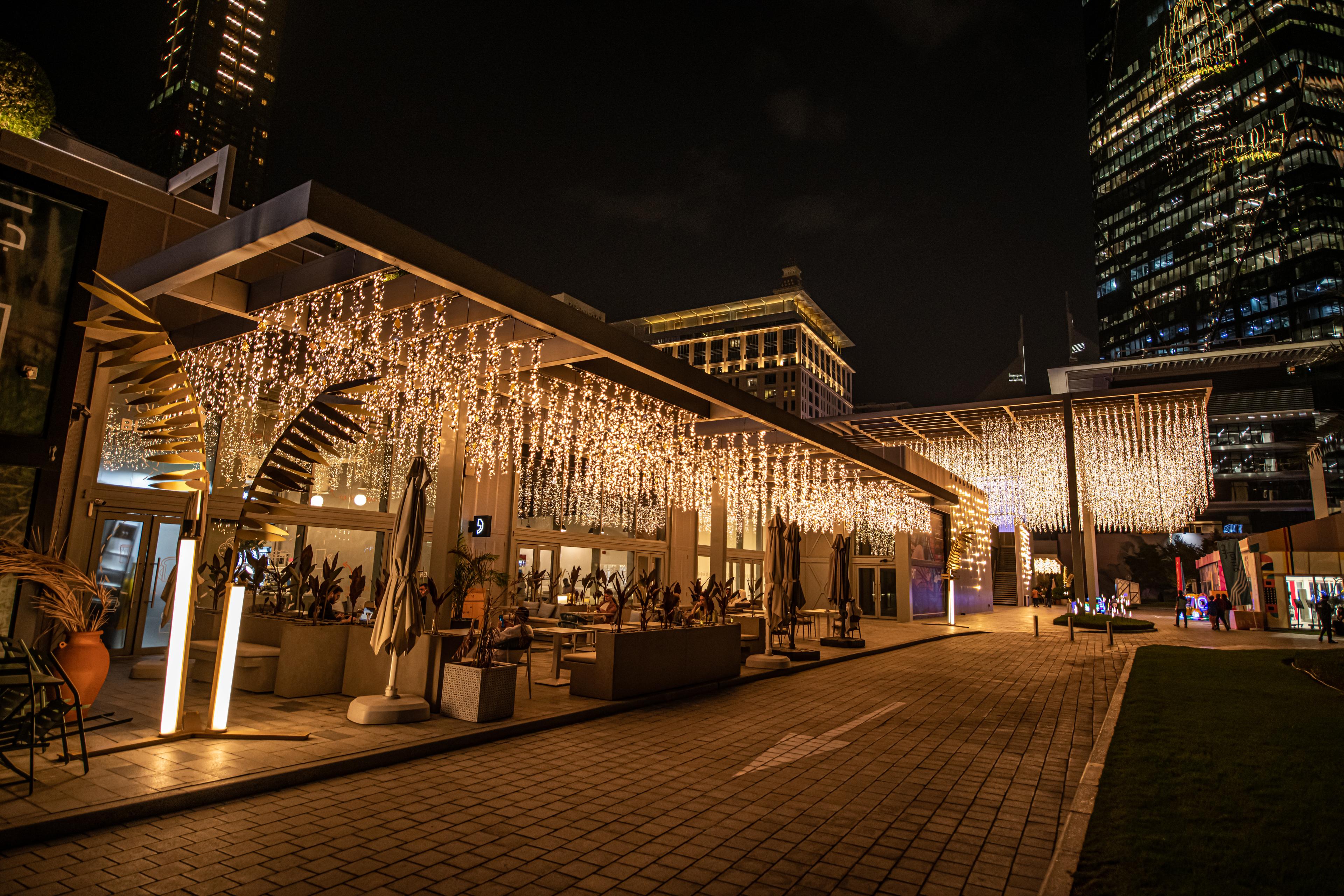
After nightfall, a district is read differently. Entrances become landmarks. Islands of light show how paths continue. Recurrent visual elements make individual buildings a cohesive place. For people on their way home, restaurant guests, or passersby, these signals influence whether an environment seems understandable and inviting.
DIFC as a mixed-use place
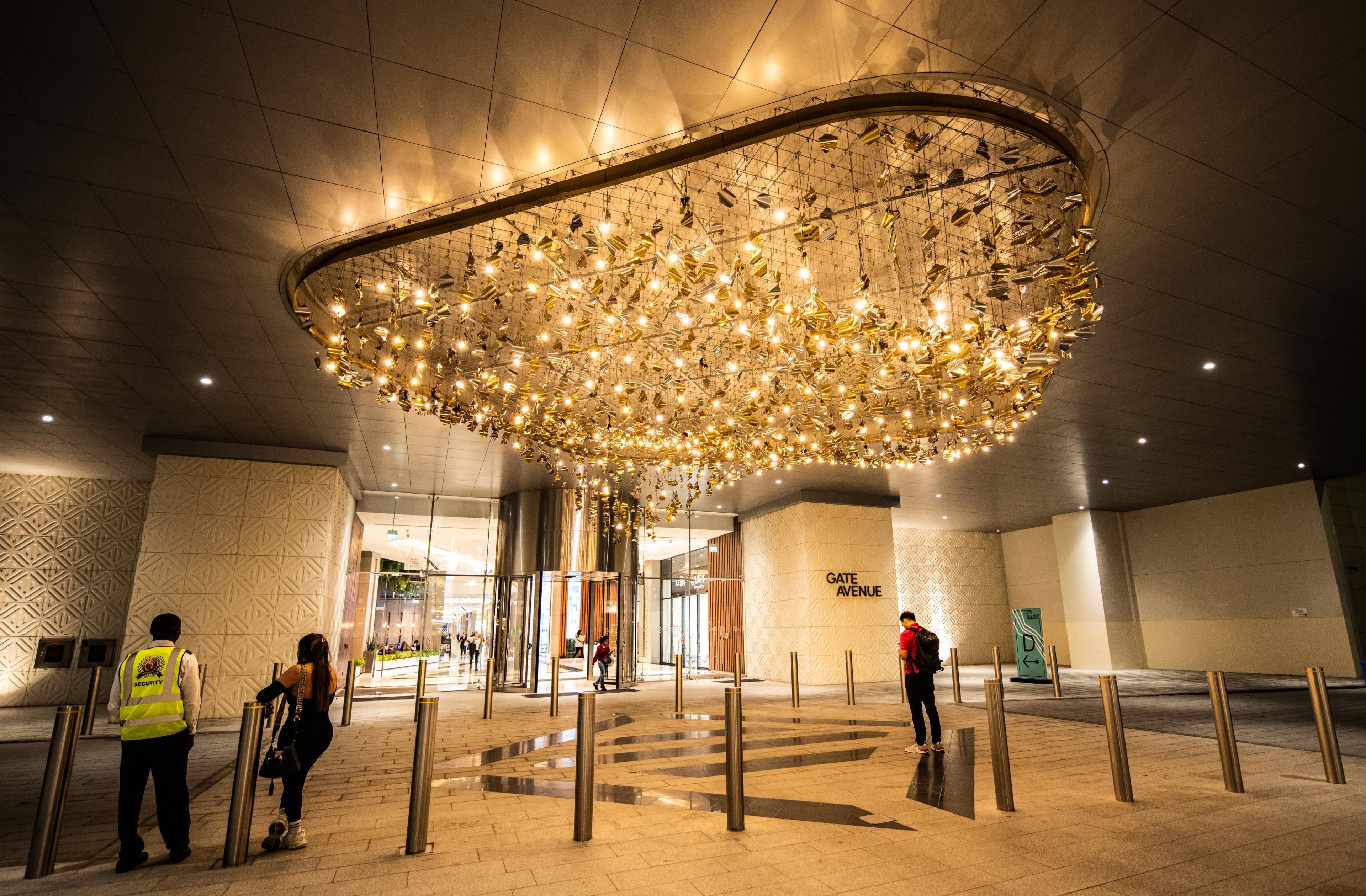
The Dubai International Financial Centre combines an international financial location with shopping, art, gastronomy, and cultural life. For an important gala, the contemporary environment needed to be complemented with warmth, sparkling accents, and high-quality elegance. MK Illumination UAE developed a permanent festive decoration for the financial and shopping area.
The concept was not limited to a single occasion. It was developed as a year-round lighting idea that combines festivity, adaptability, and a modern Emirati identity. This long-term view is crucial because a permanent installation becomes part of the daily place. It must be convincing on ordinary evenings as well as special events.
Designing for different user groups
A people-centered strategy for the evening begins with the question of who uses the district and when. Employees on their way to public transportation need clear routes. Guests at restaurants or cultural offerings need easily recognizable entrances. Anyone crossing the area should understand through recurring elements that the different sections belong to a shared destination.
These groups do not need different decoration themes. They experience the same light but from different distances and speeds. A floating light canopy can make an entrance more inviting. Vertical light cascades make architectural thresholds visible from greater distances. Repeated warm light can connect the paths between them.
Four questions for real estate teams
• Where does the evening path begin, and what should be visible first?
• Which paths and entrances need the clearest visual hierarchy?
• What should remain timeless, and what needs to adapt to different occasions?
• How is the system controlled and maintained in daily operation?
From festive occasion to operational model
A permanent concept also changes the collaboration between creative and operations teams. The opening can be associated with a gala or a seasonal program. Afterward, however, the installation becomes part of the facility management. Content changes, operating times, maintenance access, and the replacement of individual components must be considered as much as color, shape, and atmosphere.
As a result, the design does not lose expressiveness. It gains a reliable structure. A timeless basic level can create warmth and continuity, while selected adaptable elements can accommodate different events. Clear rules for these changes protect the overall identity and prevent the system from becoming a collection of unconnected individual scenes.
This also makes cooperation more precise. Designers can define the visual system, while real estate and operations teams bring in the event calendar, access requirements, and practical limits. When these roles are clarified early, adaptability becomes a controllable function and not an open promise. This facilitates later decisions and simultaneously protects the quality of the original idea.
For mixed-use districts, this coordination is particularly important. Changes must fit office hours, events, retail, and gastronomy without each area developing its own competing light language.
A shared identity beyond office hours
A corporate district does not become people-centered just by staying open longer. It needs an identity for the evening hours that creates orientation and conveys that people are entering a shared place and not just navigating between individual properties.
DIFC shows a relevant perspective: Permanent festive lighting can achieve more than seasonal decoration when planned as part of the long-term development of a district. The professional task is to connect economy, culture, and public life through a clear, adaptable, and site-specific light language.
Vielleicht interessiert Sie auch Folgendes:
Festa Luce Wakayama: How light transforms a destination
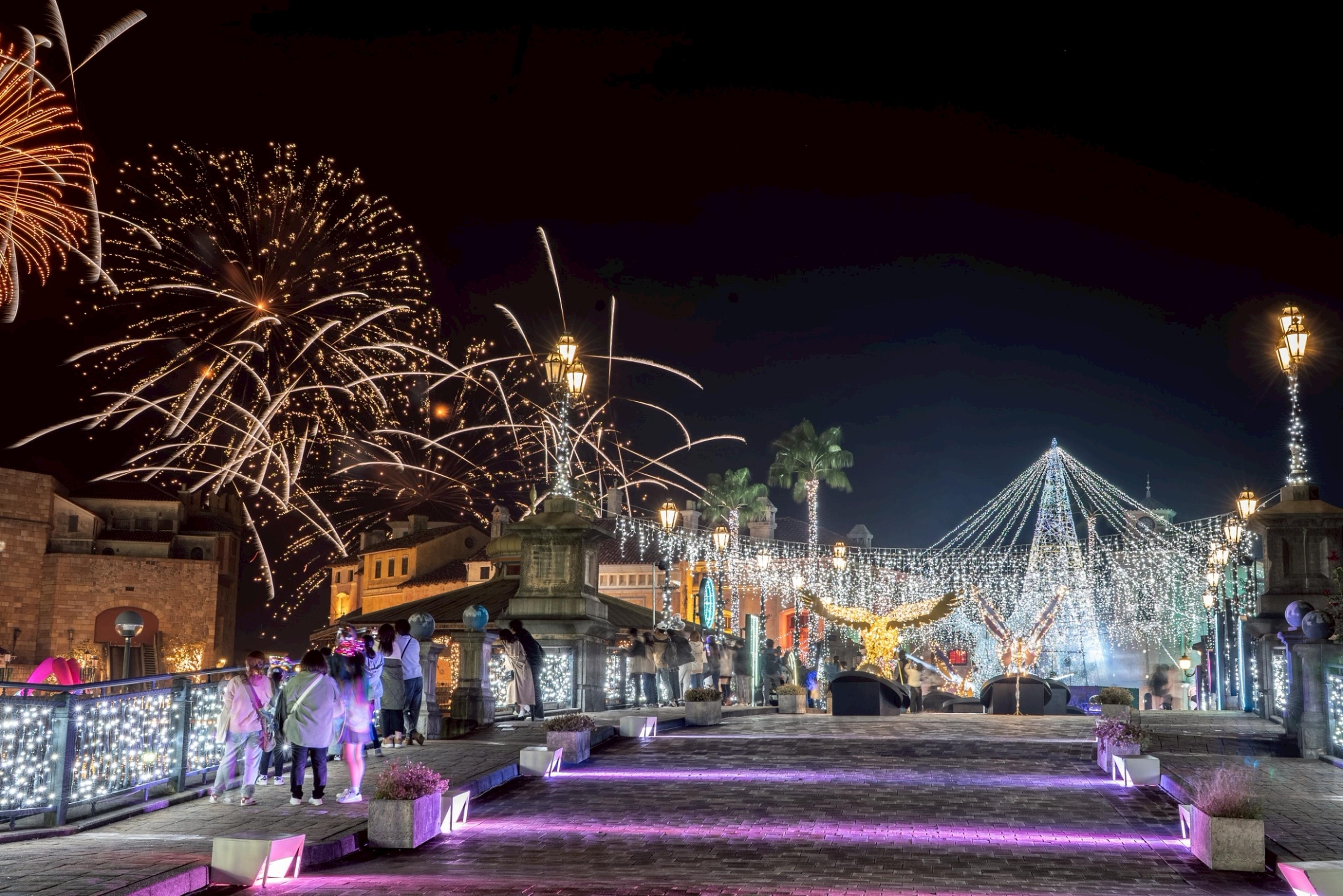
Festa Luce has developed into one of Japan's most impressive winter events and demonstrates how light production can reposition an entire region.

From temporary installation to long-term impact: Why Christmas markets are so important for cities
Christmas markets are temporary urban installations. They appear for a few weeks - and then disappear again. But their impact often lasts much longer. Cities in Europe and the Middle East increasingly use seasonal formats in public spaces as a tool to revitalize city centers. What appears to be a festive tradition is actually a strategic urban intervention.

From the familiar to the special: How light creates identity
Places rarely remain in memory due to their geography. Much more often, it is moods, images, and feelings that become entrenched. A square, an alley, or a promenade doesn't become significant solely through its function, but through what people experience there.