
How historical architecture makes corporate spaces more human
In historical corporate buildings, protected materials, architectural details, and preservation regulations often take center stage. These aspects are essential but only describe part of the value. Historical buildings also carry memories. People recognize the proportions of an entrance, the formal effect of a lobby, and the sequence of spaces used by generations before them.
Historical architecture is experienced, not just preserved
In historical corporate buildings, protected materials, architectural details, and preservation regulations often take center stage. These aspects are essential but only describe part of the value. Historical buildings also carry memories. People recognize the proportions of an entrance, the formal effect of a lobby, and the sequence of spaces used by generations before them.
This continuity can make a corporate environment feel more human. It offers employees and guests something stable that they can read and recognize. Seasonal design can support this relationship when it responds to the building and does not treat historical architecture as a mere decorative style.
Reading the Sun Life Building
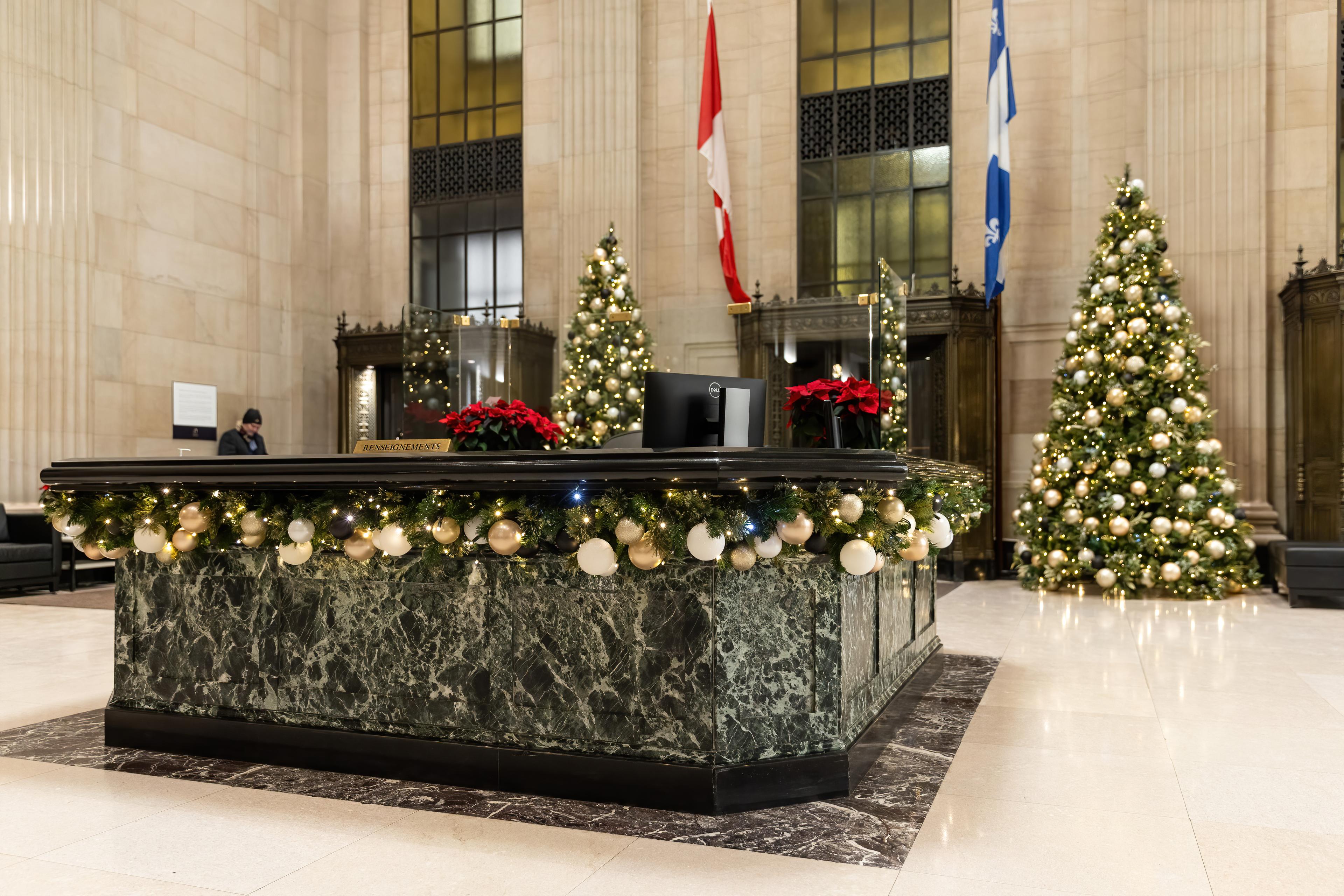
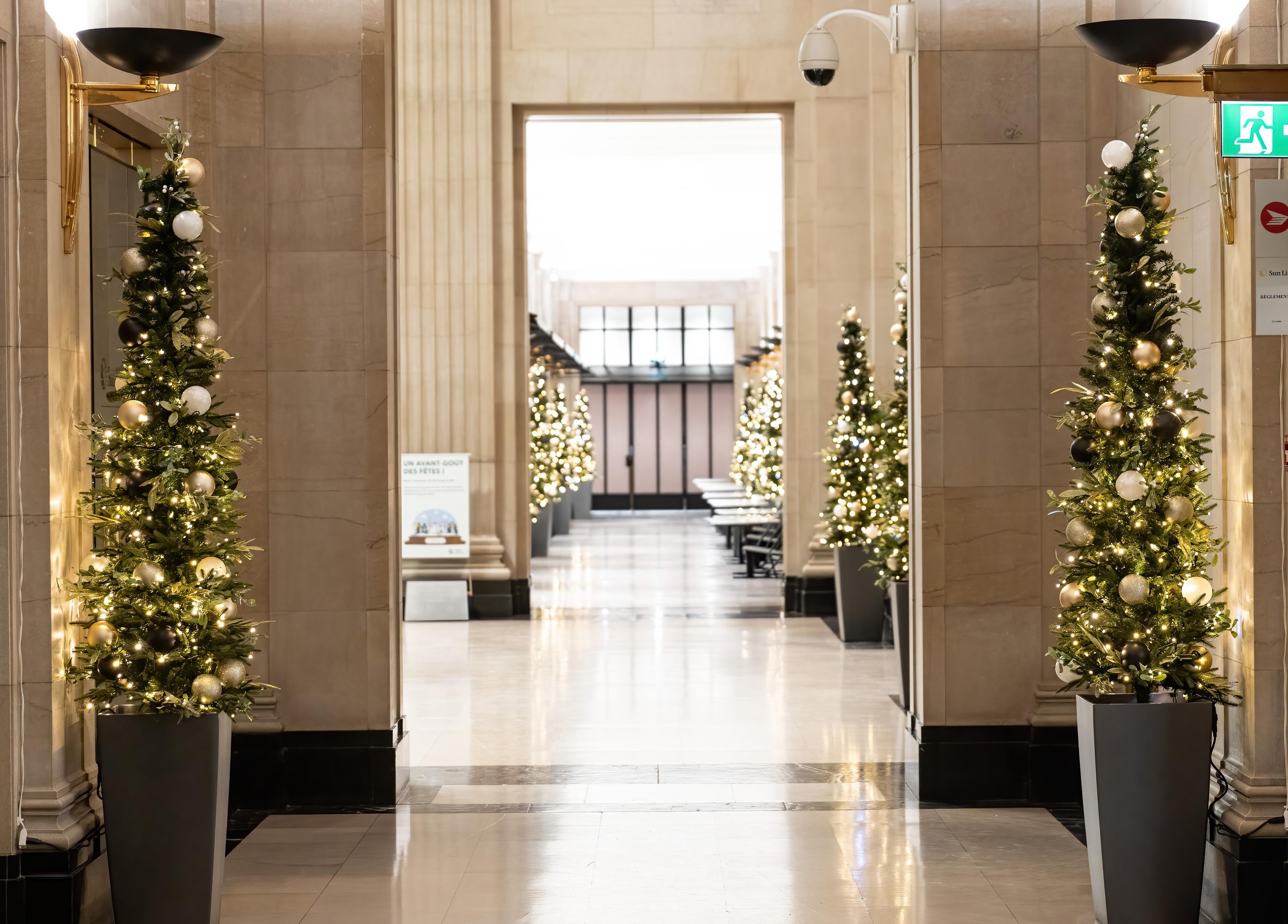
The Sun Life Building in Montreal has over a century of history. The Christmas concept was oriented towards the building's representative character and architectural elegance. Champagne and royal gold tones were combined with green and black. Illuminated chandeliers and decorative details extended through historical lobbies, entrances, and common areas.
The quality of this approach lies in its restraint. The color scheme connects to the existing character of the interiors. Green introduces a familiar seasonal material, while black and gold maintain the formal atmosphere. Light creates visibility and festivity without turning the architecture into the backdrop for a foreign theme.
Contemporary does not mean detached
Design for a historical building does not need to mimic its era of origin. Nor does it need to forgo contemporary lighting technology. What is crucial is whether new elements respect proportion, rhythm, and materiality.
A modern illuminated chandelier can be appropriate if its scale suits the lobby's volume and its light supports existing surfaces. A strictly controlled color palette can be more respectful than a historicizing object with incorrect proportions. Compatibility is achieved through relationships, not imitation.
Four principles for historical corporate buildings
• Start with the defining materials, colors, and rhythms of the building.
• Determine which sightlines and architectural details must remain open.
• Use light to make depth and spatial sequences visible, rather than illuminating all surfaces evenly.
• Select a few seasonal elements and repeat them with discipline.
A practical dialogue between teams
Historical projects benefit from early exchange between property management, design, technical professionals, and, if necessary, preservation authorities. The goal is not to reduce every idea to constraints. It's crucial to recognize the architectural qualities to be emphasized and to incorporate practical limits into the concept from the start.
Temporary mounts, cable routing, access for assembly, and the protection of existing surfaces influence what can be responsibly implemented. If these questions are clarified early, the creative team can focus on solutions that suit the building. This prevents spectacular designs from losing their impact due to technical compromises later on.
Equally important is documentation when seasonal elements are to be reused in subsequent years. Approved mounting points, electrical pathways, component positions, and handling instructions should be clearly recorded. This protects the historical substance and preserves the quality of the installation. Meanwhile, practical knowledge is not lost when teams or service partners change.
Careful documentation also helps later teams distinguish deliberate design decisions from temporary compromises during implementation. This allows for targeted adjustments without gradually changing the concept's character. It creates continuity.
Continuity supports belonging
People-centered corporate design is often associated with new offerings or flexible workplace concepts. In historical buildings, it can also emerge from continuity: from the sense that a place has an identity larger than a single tenant, event, or design cycle.
Seasonal lighting can contribute to this identity by inviting people to perceive the building anew without disguising it. The goal is not nostalgia but a careful dialogue between existing architecture and a temporary layer of light, color, and festivity.
Vielleicht interessiert Sie auch Folgendes:

From the familiar to the special: How light creates identity
Places rarely remain in memory due to their geography. Much more often, it is moods, images, and feelings that become entrenched. A square, an alley, or a promenade doesn't become significant solely through its function, but through what people experience there.
How historical architecture makes corporate spaces more human
In historical corporate buildings, protected materials, architectural details, and preservation regulations often take center stage. These aspects are essential but only describe part of the value. Historical buildings also carry memories. People recognize the proportions of an entrance, the formal effect of a lobby, and the sequence of spaces used by generations before them.

How to design an impactful Christmas market: 7 strategic principles
Christmas markets are often seen as seasonal sales events. In reality, successful Christmas market design goes far beyond stalls and decorations. It is a combination of thoughtful market planning, festive lighting design, and strategic urban placemaking.