
When the facade becomes the neighbor: Programmable light in public space
A company facade is usually considered part of the property it encloses. After dark, its visual impact extends much further. It is perceived from streets, thoroughfares, neighboring buildings, and public spaces. Many people experience its lighting daily without ever entering the building.
The audience outside the building
A company facade is usually considered part of the property it encloses. After dark, its visual impact extends much further. It is perceived from streets, thoroughfares, neighboring buildings, and public spaces. Many people experience its lighting daily without ever entering the building.
This gives programmable facade lighting a public dimension. It's no longer just about what an organization wants to show. Equally relevant are the frequency of changes, the speed of movement, the viewpoints, and the relationship to the pedestrian level.
Gängtappen: a facade on the scale of commuter flows
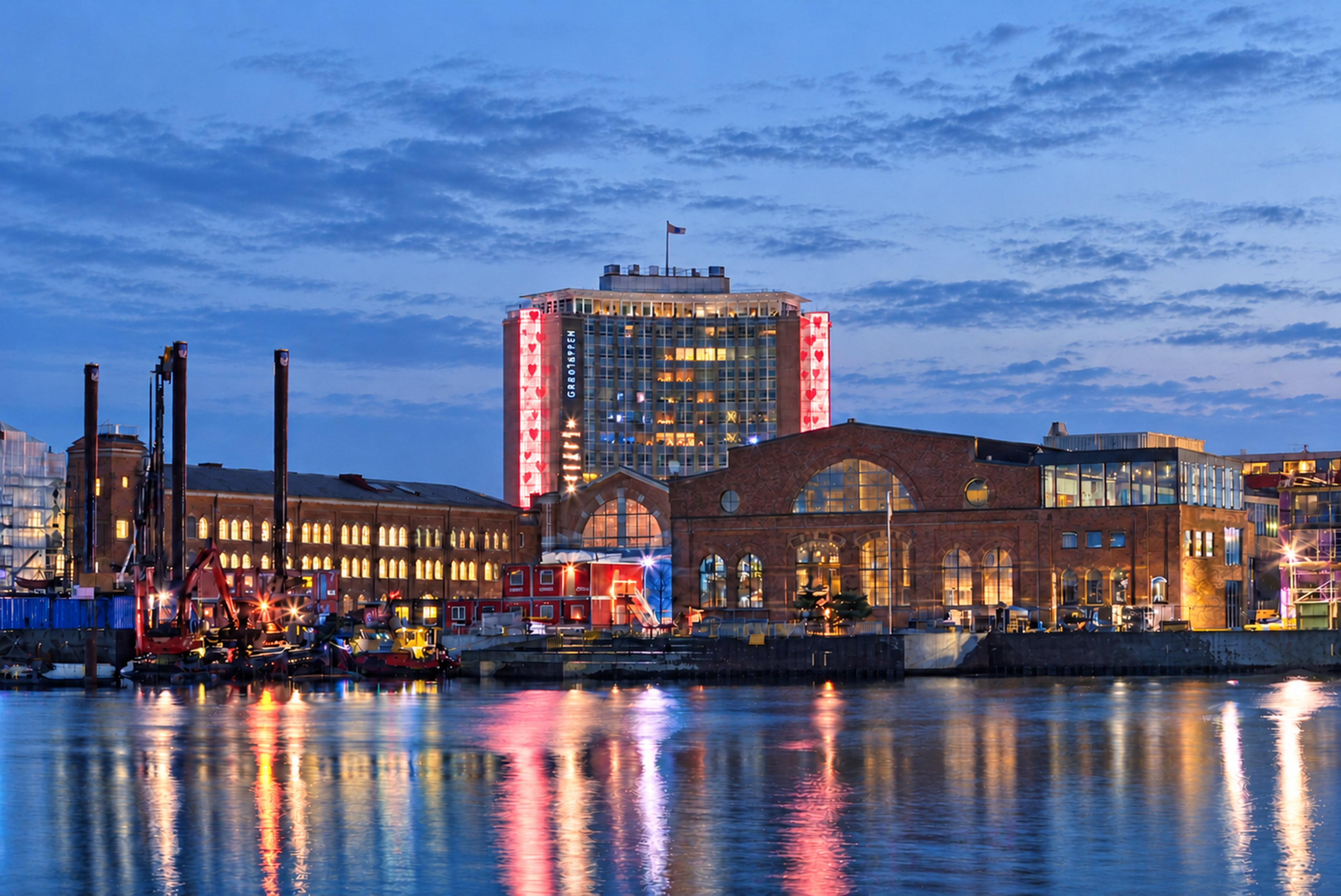
Gängtappen is an office building in the western harbor of Malmö, a dynamic district that thousands of commuters pass through daily. For Valentine's Day, MK Illumination Sweden staged the facade with around 40,000 individually animatable RGB light points. Trees at street level were bathed in red light, connecting the large-scale facade composition with the pedestrian area.
The system can be reprogrammed, allowing the appearance to change without replacing the physical light structure. This adaptability is valuable but also raises the demand for content planning. A facade with many technical possibilities still requires a clear occasion and understandable idea for each new sequence.
Shaping movement that remains readable
Programmable light is often judged by technical possibilities: resolution, color spectrum, animation, and control. The public perception asks different questions. A fast sequence may be visible from a distant road but difficult to understand from a nearby footpath. A complex image might work on a screen but falls apart on an architectural facade.
Design teams should therefore test content from real distances and at different movement speeds. Transitions between sequences are as important as the individual images. Brightness and movement must consider the nighttime environment. Elements at street level can connect a large-scale facade idea with the human scale.
Beijing: cultural significance on the skyline scale
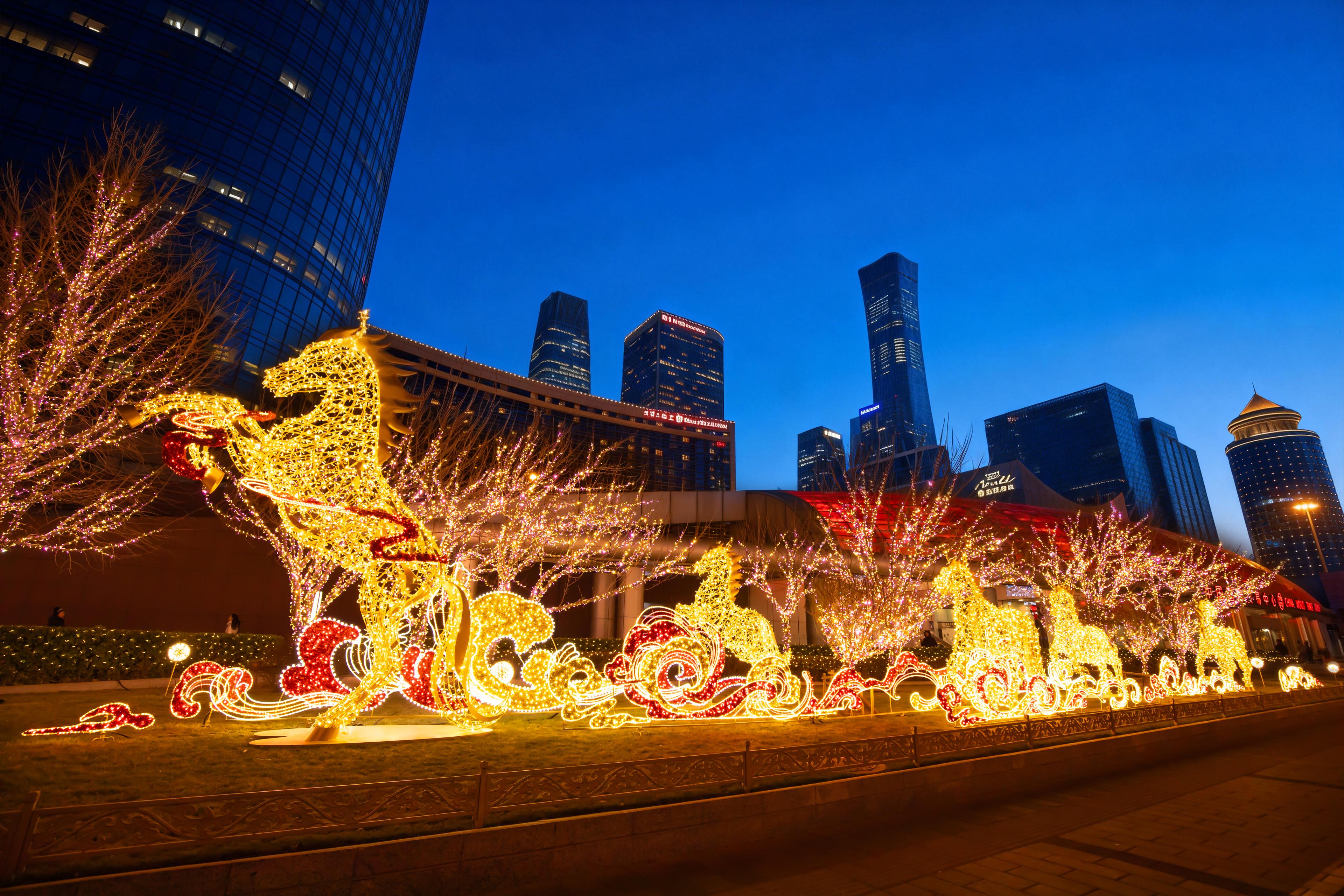
The China World Trade Center in Beijing shows a different but related approach. MK Illumination China developed the theme "Cloud Soaring, Steed Leaping—Blessings Abound in Beijing." Horse, auspicious clouds, and flowing light trails were combined into a composition for a place that is both a trading center and a cultural landmark.
Public relevance arises here from cultural readability. The horse forms a recognizable main symbol. Clouds, color, and movement place it in a larger narrative of progress, elegance, and good fortune. The surrounding skyline also becomes part of the perception.
Five tasks for outward-facing light
• Cover all important viewing distances, not just the nearest one.
• Adjust movement and pace to how people pass by the building.
• Connect the facade composition with entrances and the pedestrian level.
• Use culturally specific symbols with a clear and substantiated narrative.
• Plan later content as carefully as the first presentation.
After the opening, clear responsibilities are needed
Reprogramming means a permanent editorial responsibility. Real estate teams should determine who approves new content, how sequences are tested on the real facade, and what visual boundaries protect the nighttime environment. A simple content calendar with clear review keeps later programs relevant without diluting the established identity of the building at night.
Technical maintenance and content management should therefore be planned together. A system that functions reliably but shows conflicting messages does not fulfill its design purpose. Conversely, good content helps little if the facade cannot be operated and maintained in a planned way. Responsibilities, review steps, and operating procedures should therefore be part of a shared concept.
A building as part of public life
A programmable facade can support different occasions and create a recognizable identity for the evening hours. Design quality, however, depends on more than the technical spectrum. Once a building is visible throughout the entire district, its lighting becomes part of a shared experience. Only when this larger audience is considered a genuine target group is responsible design for the public space achieved.
Vielleicht interessiert Sie auch Folgendes:
From business day to shared city life: Corporate districts after nightfall
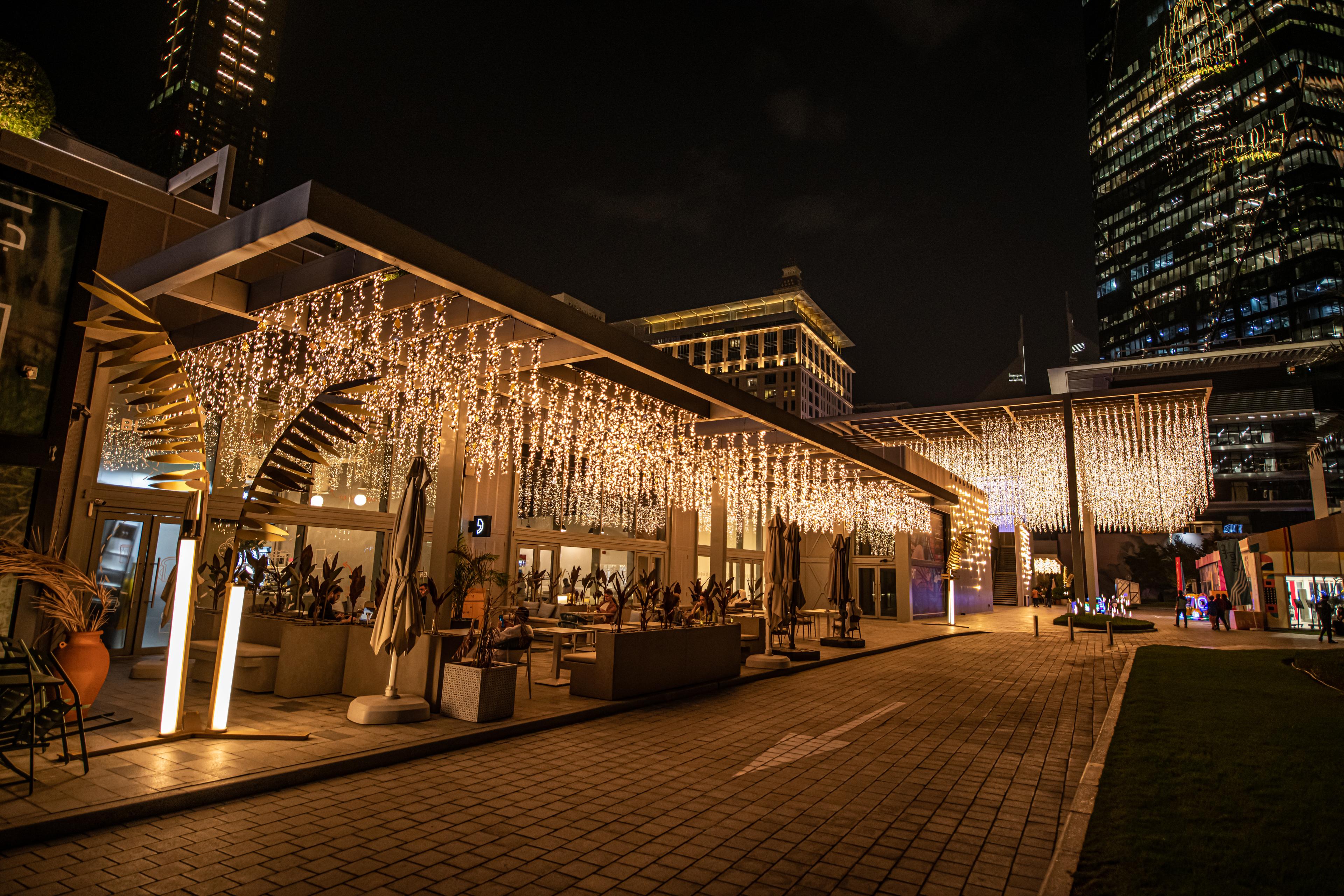
A corporate district is often described by its function during the day: offices, meetings, services, and business operations. However, many of these places today also include restaurants, shops, cultural offerings, public pathways, and event spaces. Their role changes over the course of the day. The lighting should visibly support this transformation.

From temporary installation to long-term impact: Why Christmas markets are so important for cities
Christmas markets are temporary urban installations. They appear for a few weeks - and then disappear again. But their impact often lasts much longer. Cities in Europe and the Middle East increasingly use seasonal formats in public spaces as a tool to revitalize city centers. What appears to be a festive tradition is actually a strategic urban intervention.

From the familiar to the special: How light creates identity
Places rarely remain in memory due to their geography. Much more often, it is moods, images, and feelings that become entrenched. A square, an alley, or a promenade doesn't become significant solely through its function, but through what people experience there.